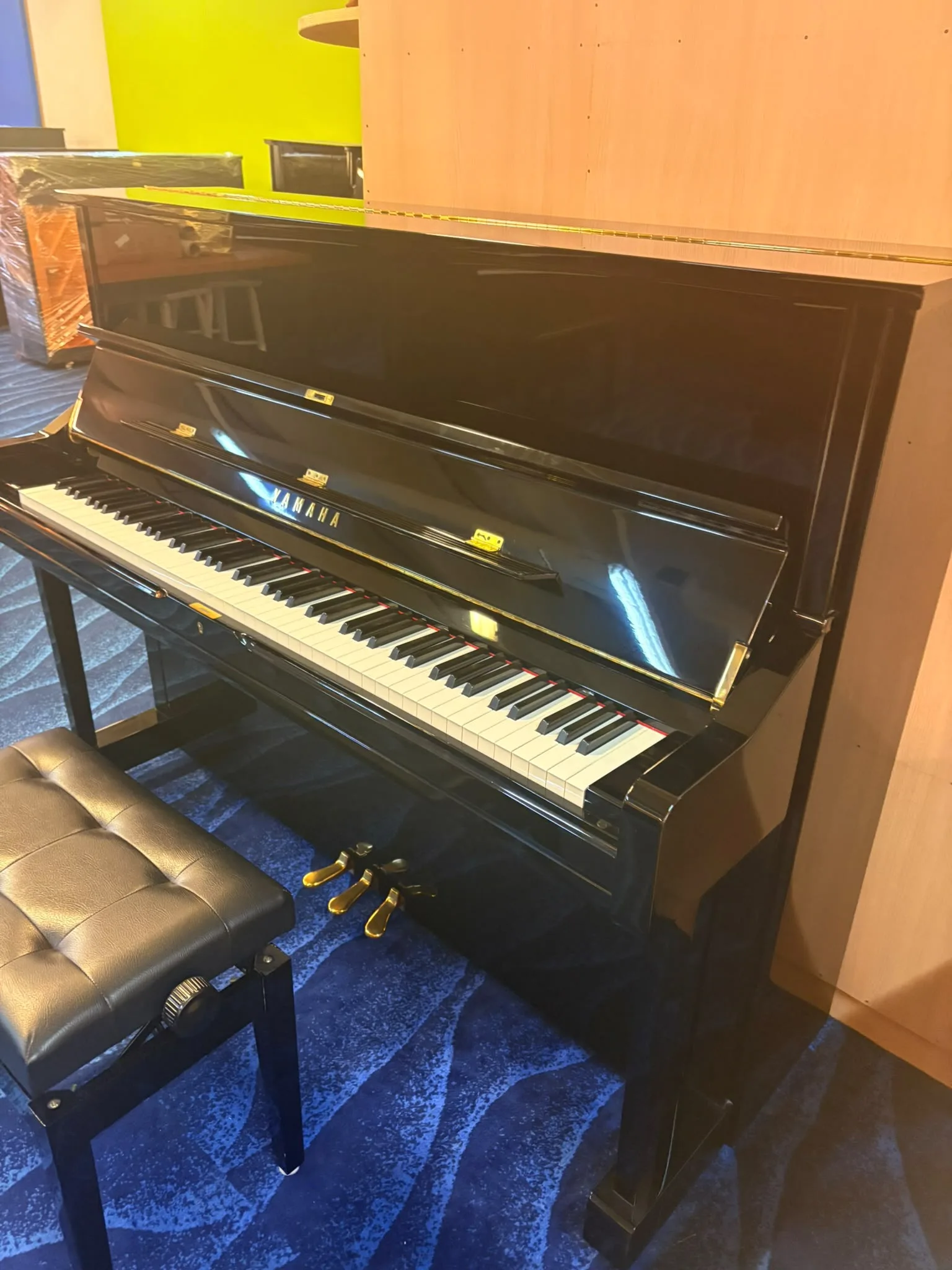
All uprights
Every size
Most pianos in Singapore homes are uprights, and most of the difference between one and the next is height. A few centimetres change how much bass there is and how long a note carries.
Read about upright pianos →Home/Available Pianos/Boston UP-132E
Upright piano · 132 cmThe tallest upright Steinway and Sons designs, at 132 cm, built for it in Japan by Kawai. A tall case and a long string in a cabinet that still stands against a wall.
Steinway and Sons designs the Boston line and has it built in Japan by Kawai. The UP-132E Performance Edition is the tallest upright in that line. The 132 in the name is the height of the case in centimetres, and in an upright that height is the specification that decides how much bass there is.
At 132 cm it is taller than a Yamaha U3 or a Kawai K300, which puts a longer bass string and a larger soundboard behind the same footprint on your floor. What you hear is a bass that keeps its shape rather than turning to thud, and a note that carries for longer before it dies.
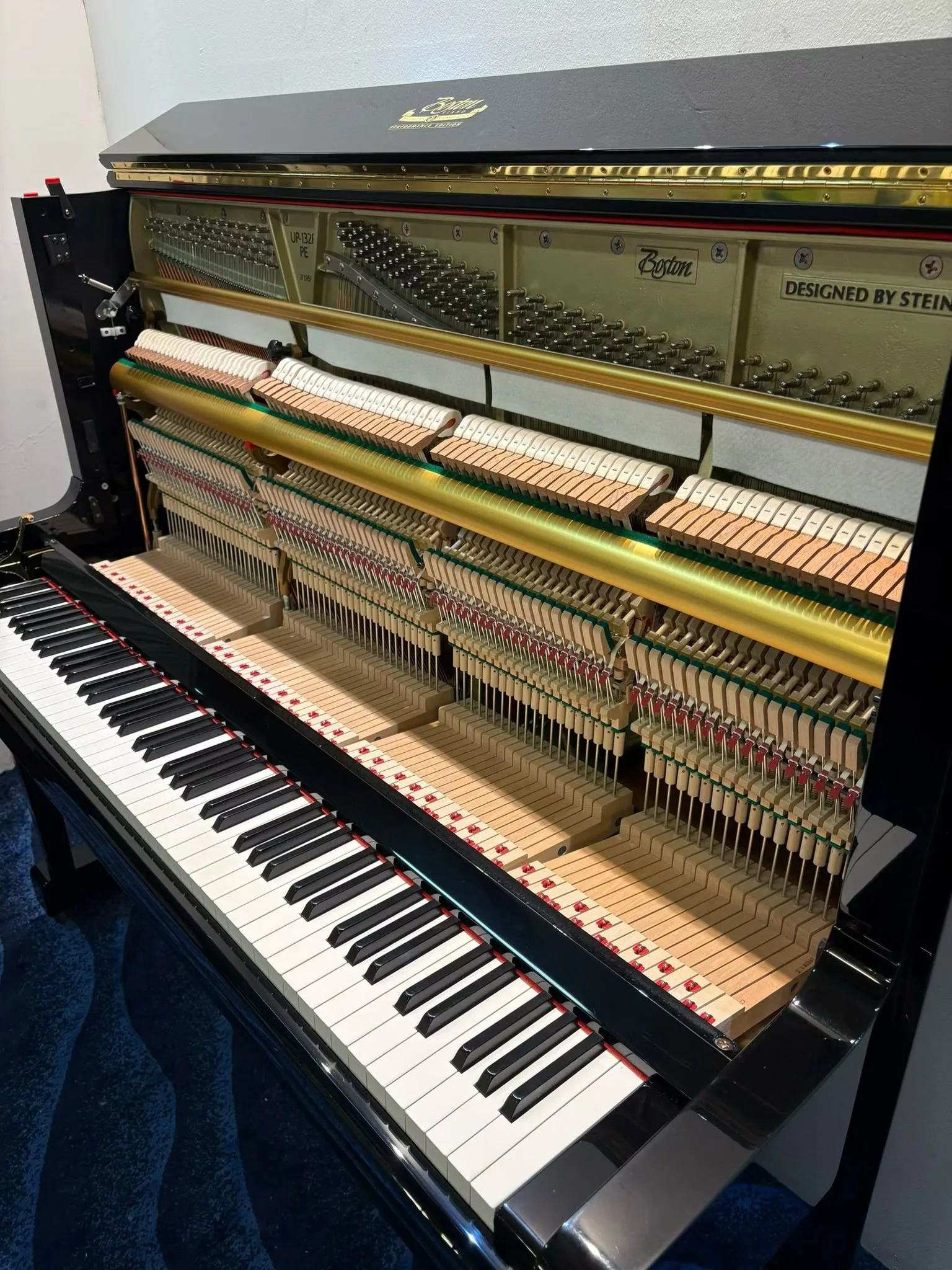
The one in these photographs is on our floor at IMM with the top board off. The model sticker on the plate reads UP-132E PE and the casting beside it reads designed by Steinway and Sons, which is the instrument stating what it is rather than us doing it for it.
Ask for current availability and price
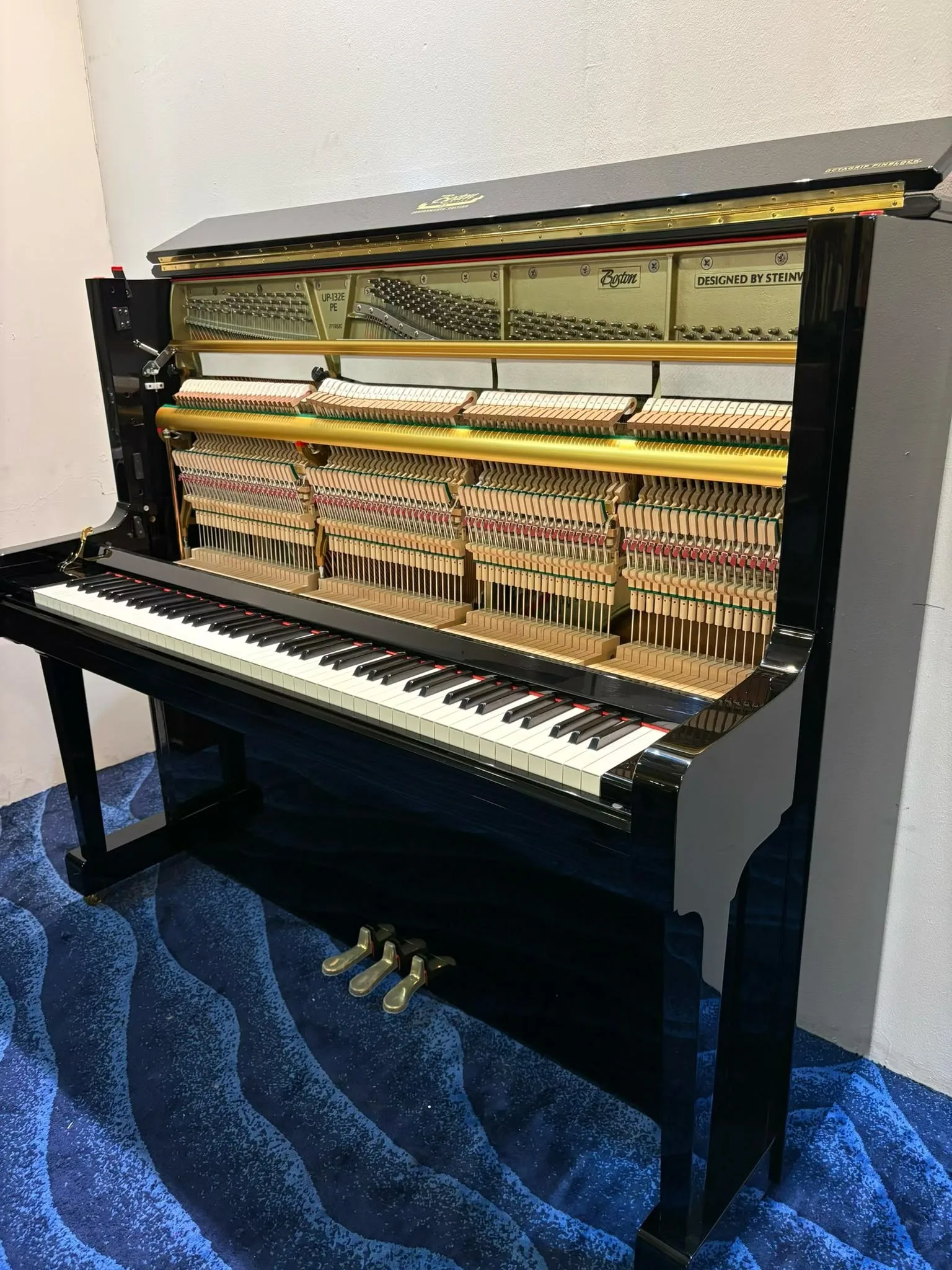
The same four we check ourselves before an instrument goes on the floor. Every instrument is an original used piano. Not reconditioned, not rebuilt. Ask us about any of them on a specific piano and you get a straight answer.
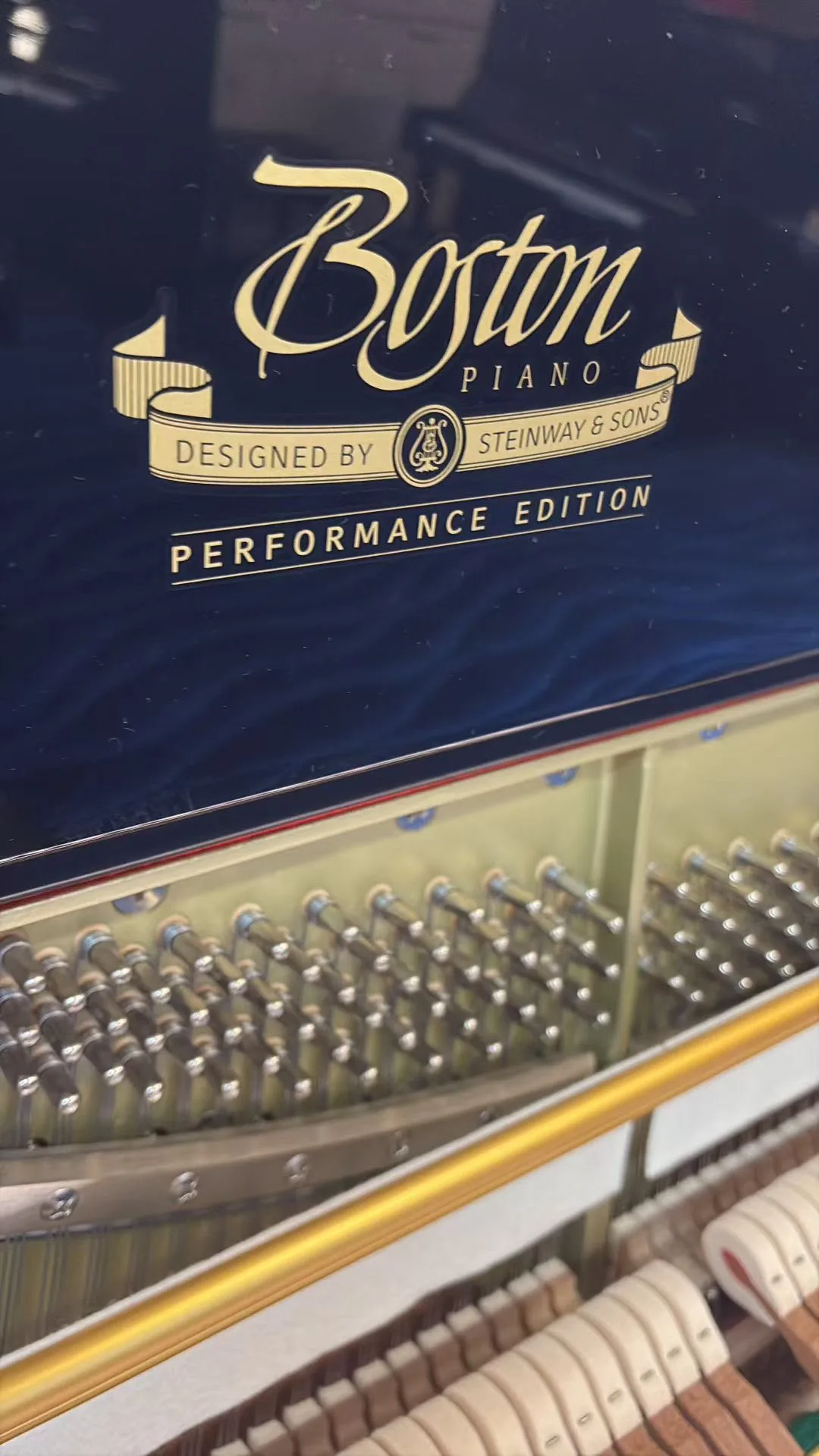
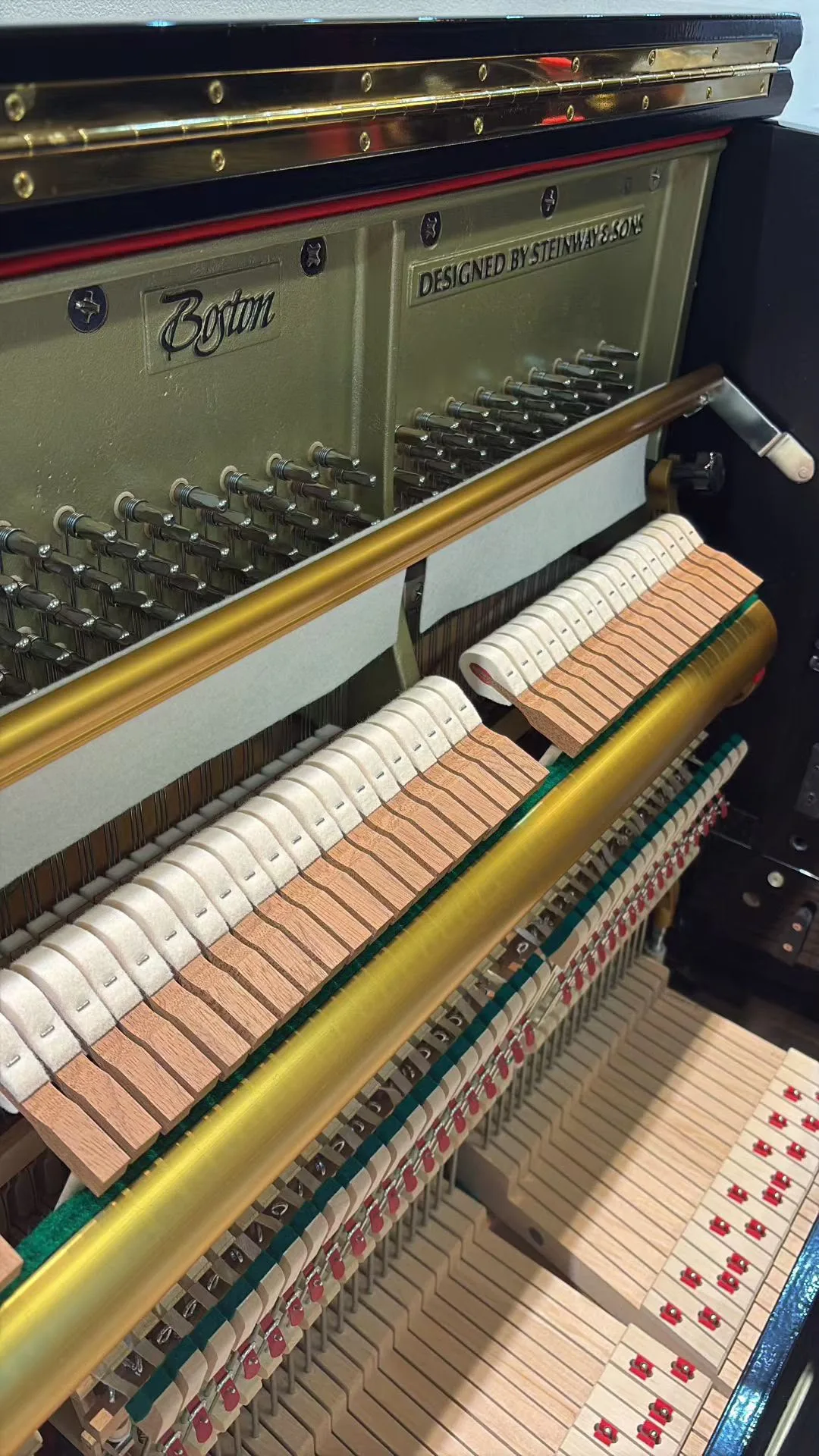
Two tall uprights aimed at the same buyer from two different traditions. The YUS5 is Yamaha at the top of its upright range, the Boston is a Steinway design built by Kawai. Play them side by side and the choice tends to make itself.
Both, back to back, in the same room on the same afternoon. That is a fifteen minute job at the viewing gallery and it settles the question far better than any page can.
No. Kawai builds it, but the design is Steinway and Sons and the two firms build their own instruments differently. The scale, the tapered soundboard and the case are Steinway design decisions rather than Kawai ones.
The honest way to settle it is to play a Boston and a Kawai of similar height next to each other, which takes about fifteen minutes on our floor.
It is 132 cm, which makes it the tallest upright in the Boston line. Height matters more than almost anything else in an upright, because a taller case takes a longer bass string and a bigger soundboard.
That is the difference between a bass note you can hear the pitch of and one that arrives as a thump.
A tall upright like this and a small grand around five feet are genuinely cross shopped, and the upright often wins on sound for the money because the string length is comparable while the price is not.
What a grand gives you that an upright cannot is the action, which repeats faster and more evenly because gravity resets it. If you are playing at a level where that matters, you will feel it.
It depends on the year and the condition, so a figure for the model in general would be a guess. Ask about the instrument that is actually on the floor and you get a real number.
All uprights
Most pianos in Singapore homes are uprights, and most of the difference between one and the next is height. A few centimetres change how much bass there is and how long a note carries.
Read about upright pianos →Yamaha
121 cm
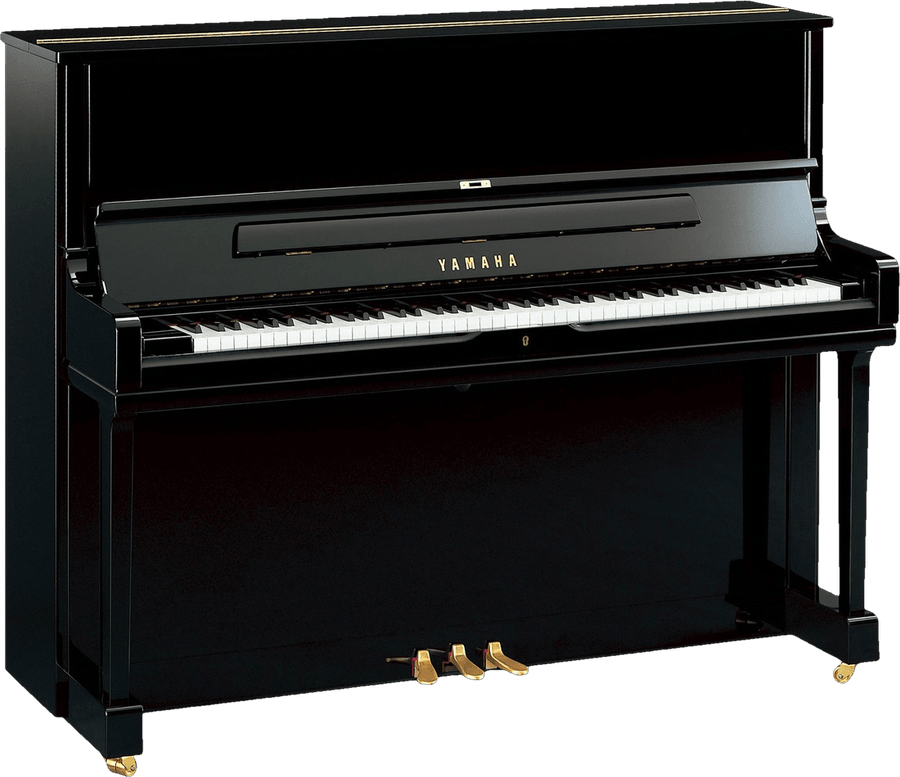
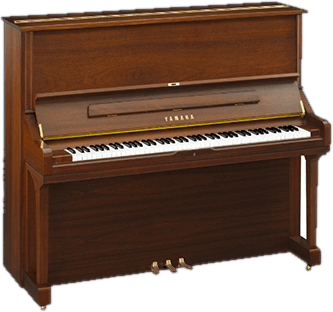
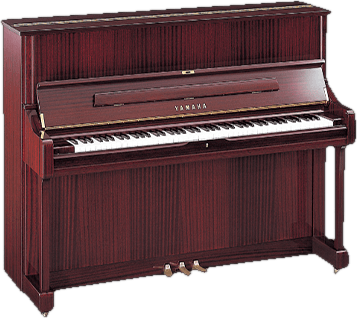
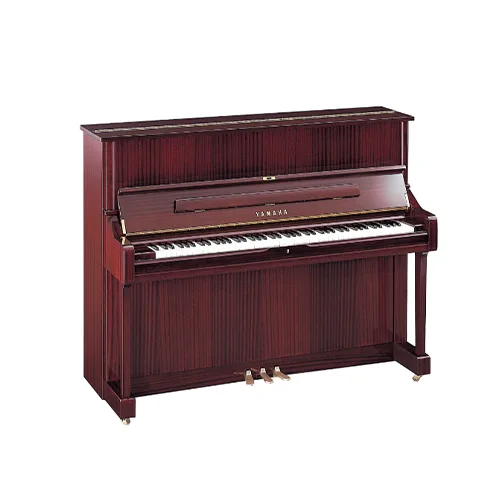
The upright most teachers name first and the one most homes in Singapore end up with. If you have asked three people for a recommendation and two of them said U1, this is why.
Read about it →Yamaha
131 cm
Ten centimetres taller than a U1, and those ten centimetres are the whole point. Longer strings, a bigger soundboard, and a bass that sounds like a piano rather than a suggestion of one.
Read about it →Yamaha
The top of the U series. Bought by people who have decided they are buying one piano and are not going to do this again.
Read about it →Kawai
122 cm
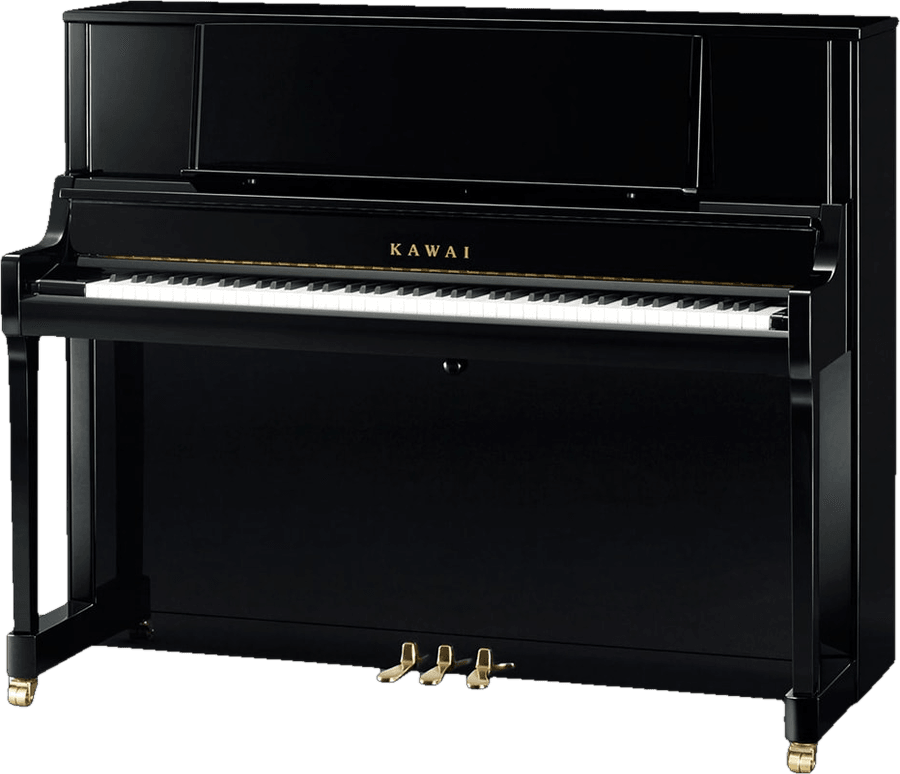
Kawai’s answer to the U1, and the Kawai we are asked about by name more than any other. Warmer than the Yamaha, and built with an action that has a specific argument behind it.
Read about it →Message us with the model and we will tell you what is in, what condition it is in, and what it costs. If we have nothing suitable we will say that instead.