Yamaha
Grand
161 to 186 cm
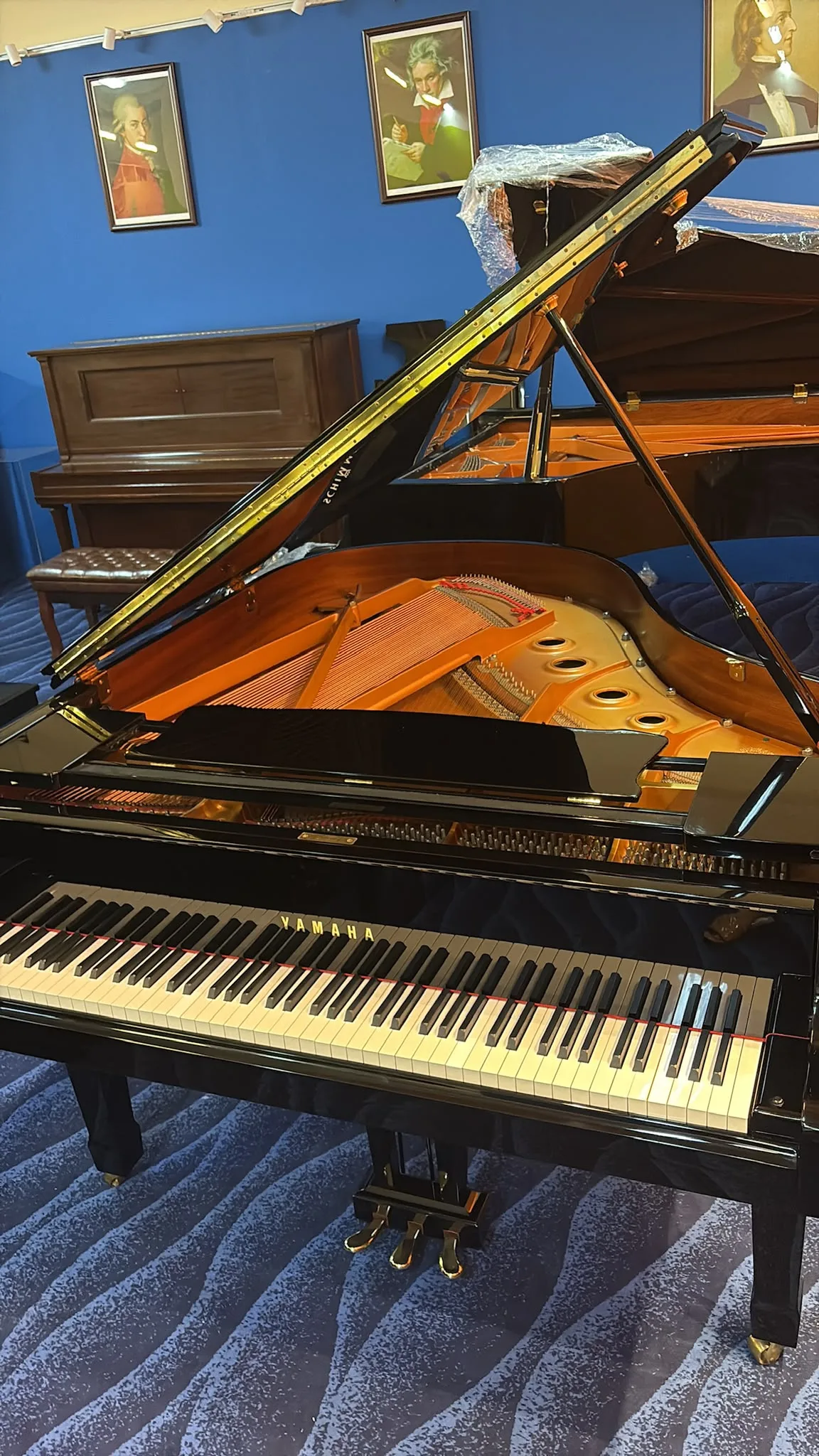
The grand most people in Singapore mean when they say they want a grand. The real question is less which maker and more which length.
Read about it →Home/Available Pianos/Grand Pianos
Grand piano · 180 cm and upThe size people ask for by name is around six feet. It is long enough to behave like a proper grand and short enough to place in a home or a small hall, which is why it is the most requested length we see.
In a grand, length is the specification that matters. A longer case takes longer bass strings and a bigger soundboard, and those two things decide how the instrument sounds far more than the badge on the fallboard does. A six foot grand and a five foot grand from the same maker are genuinely different instruments.
The other thing length buys is the action. A grand action repeats faster and more evenly than an upright because gravity returns the hammer rather than a spring, and a longer case gives that action more room to be built properly.
Ask for current availability and price
Sizes are the manufacturer figures. What is actually in the viewing gallery changes as instruments come and go, so ask before you travel.
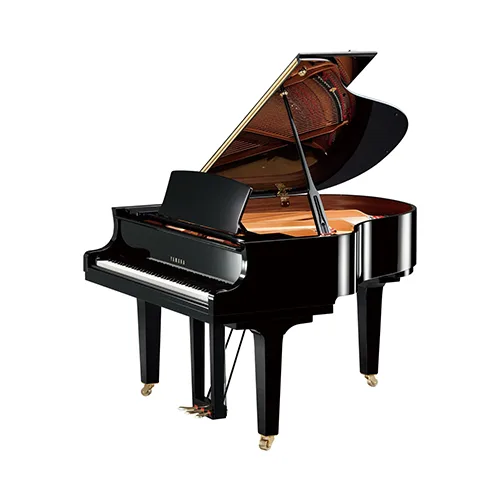
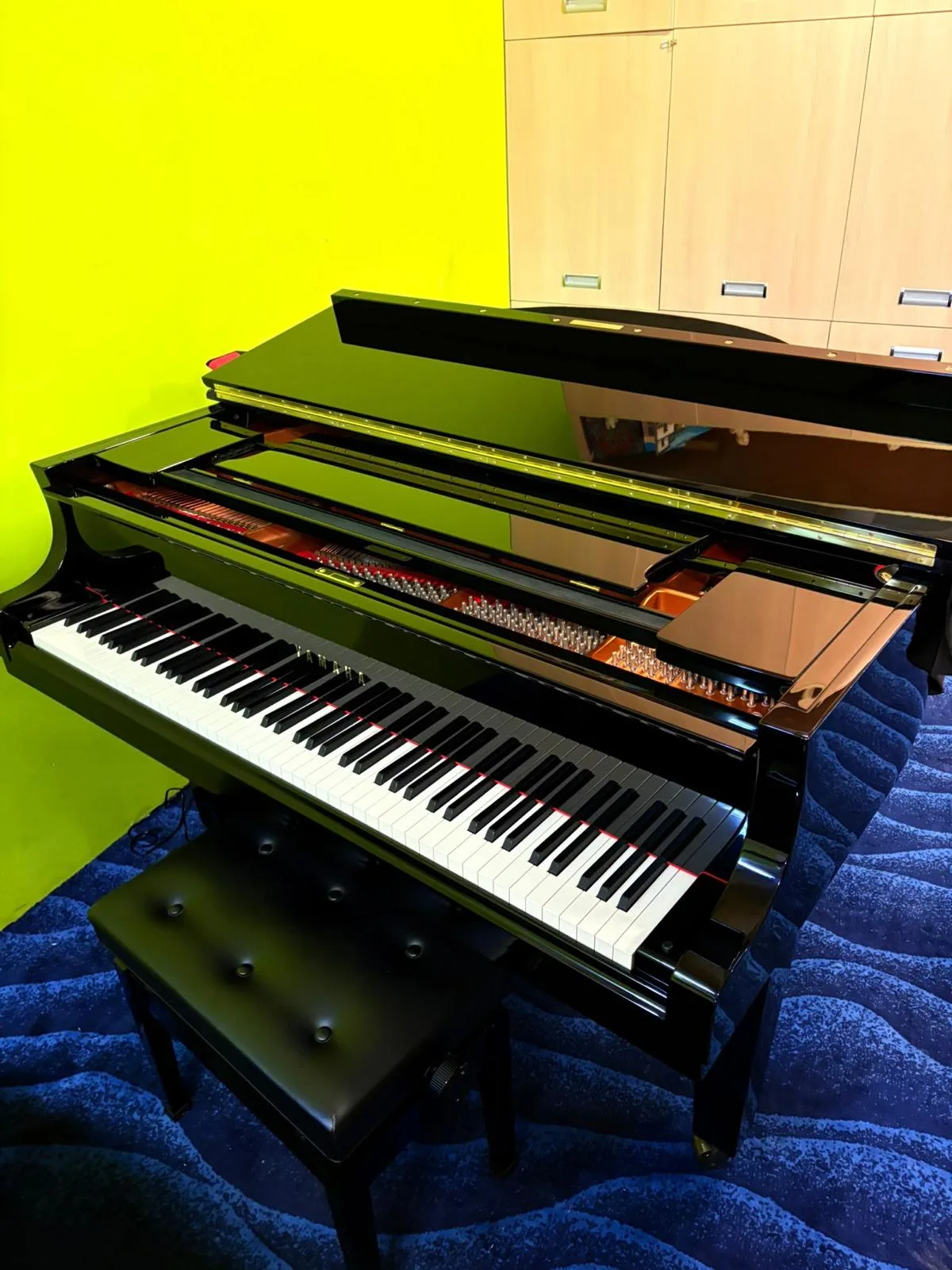
Yamaha
161 to 186 cm
The grand most people in Singapore mean when they say they want a grand. The real question is less which maker and more which length.
Read about it →Kawai
166 cm
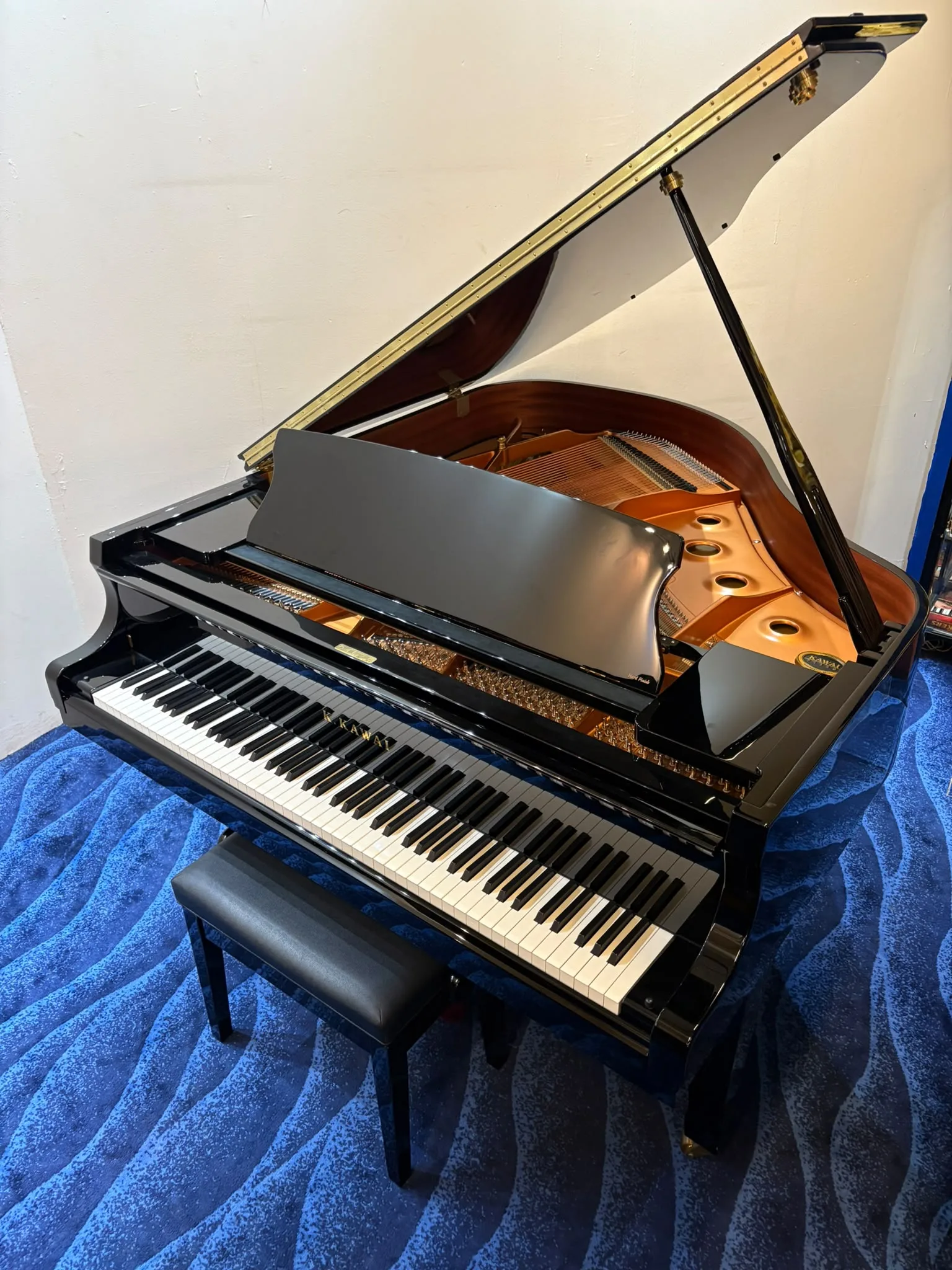
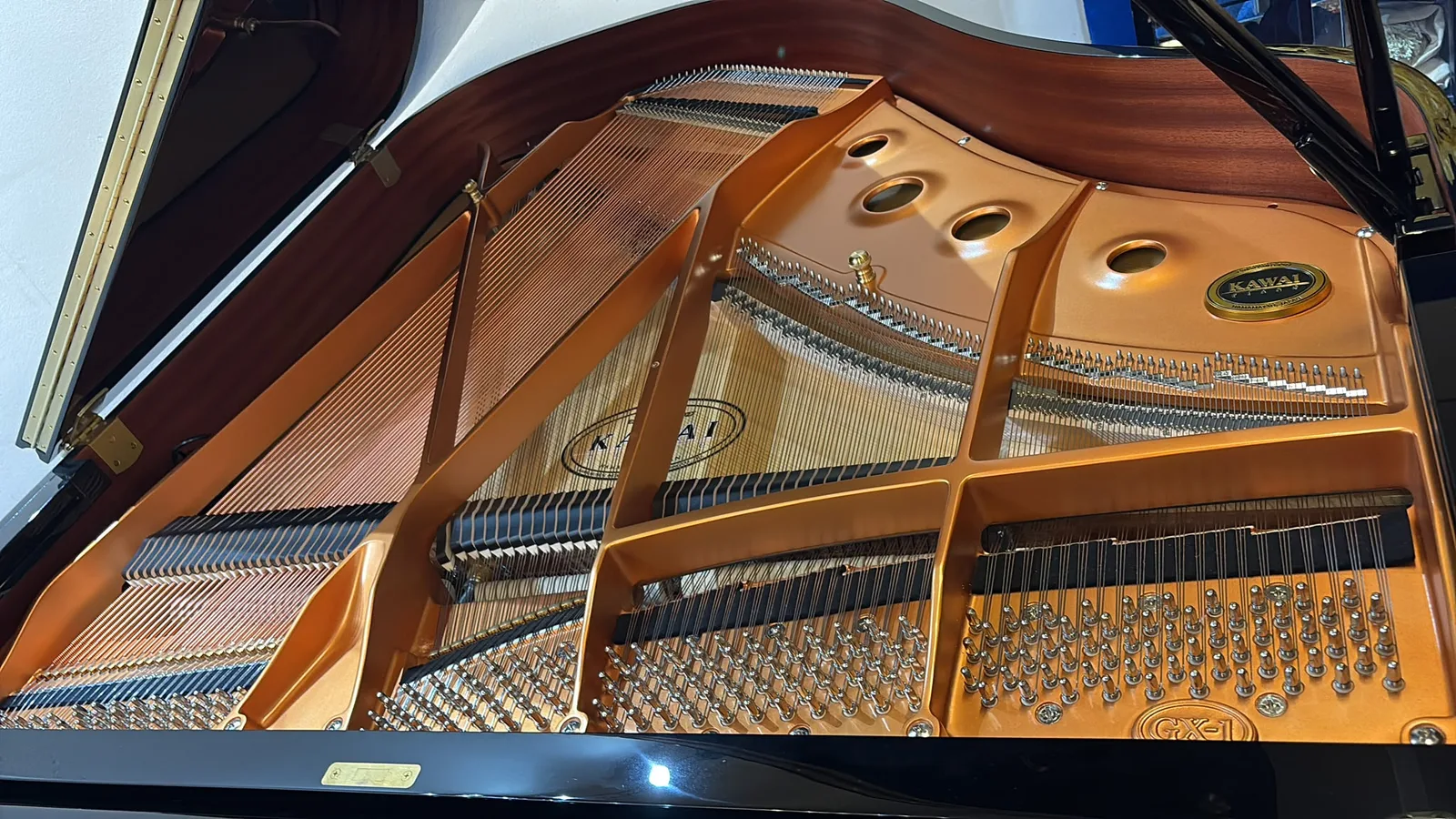
Two years old, 166 cm, from Kawai’s GX BLAK series, and the most recent grand on our floor. The model and the serial are both cast and stamped into the plate, so that age is a matter of record rather than an estimate.
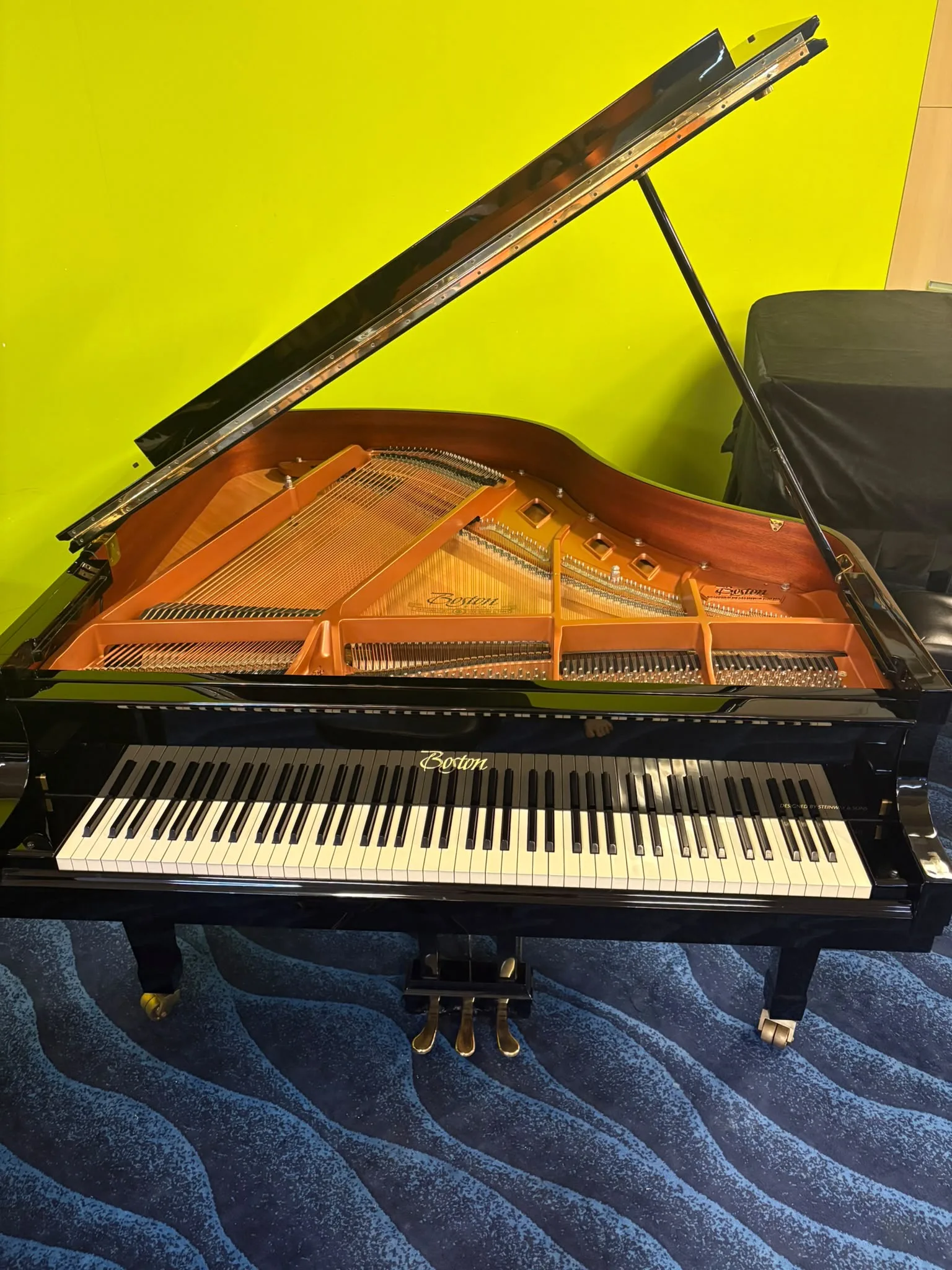
Read about it →Boston
A grand designed by Steinway and Sons and built in Japan by Kawai, for players who want that design thinking at a price a home can justify.
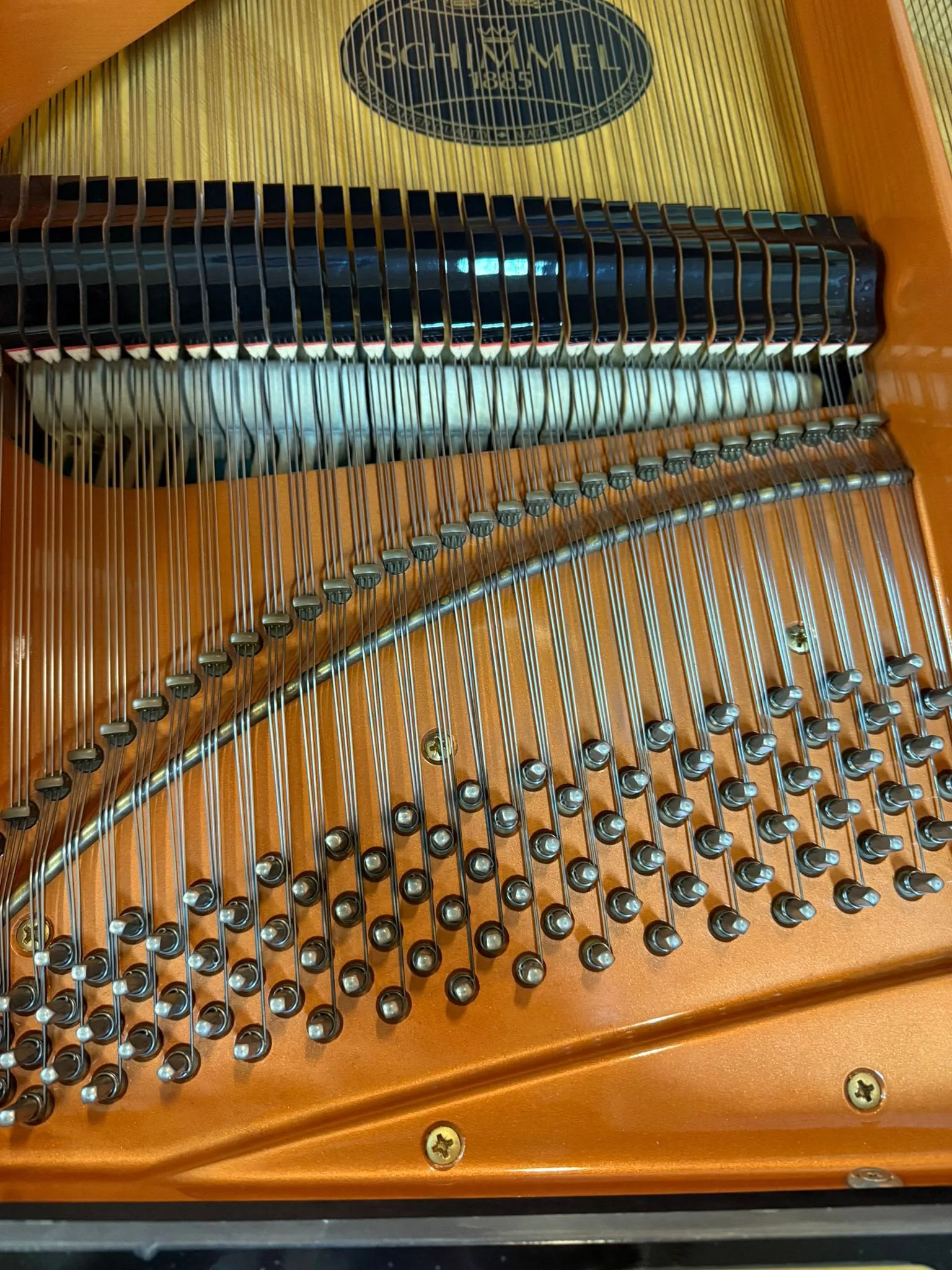
Read about it →Schimmel
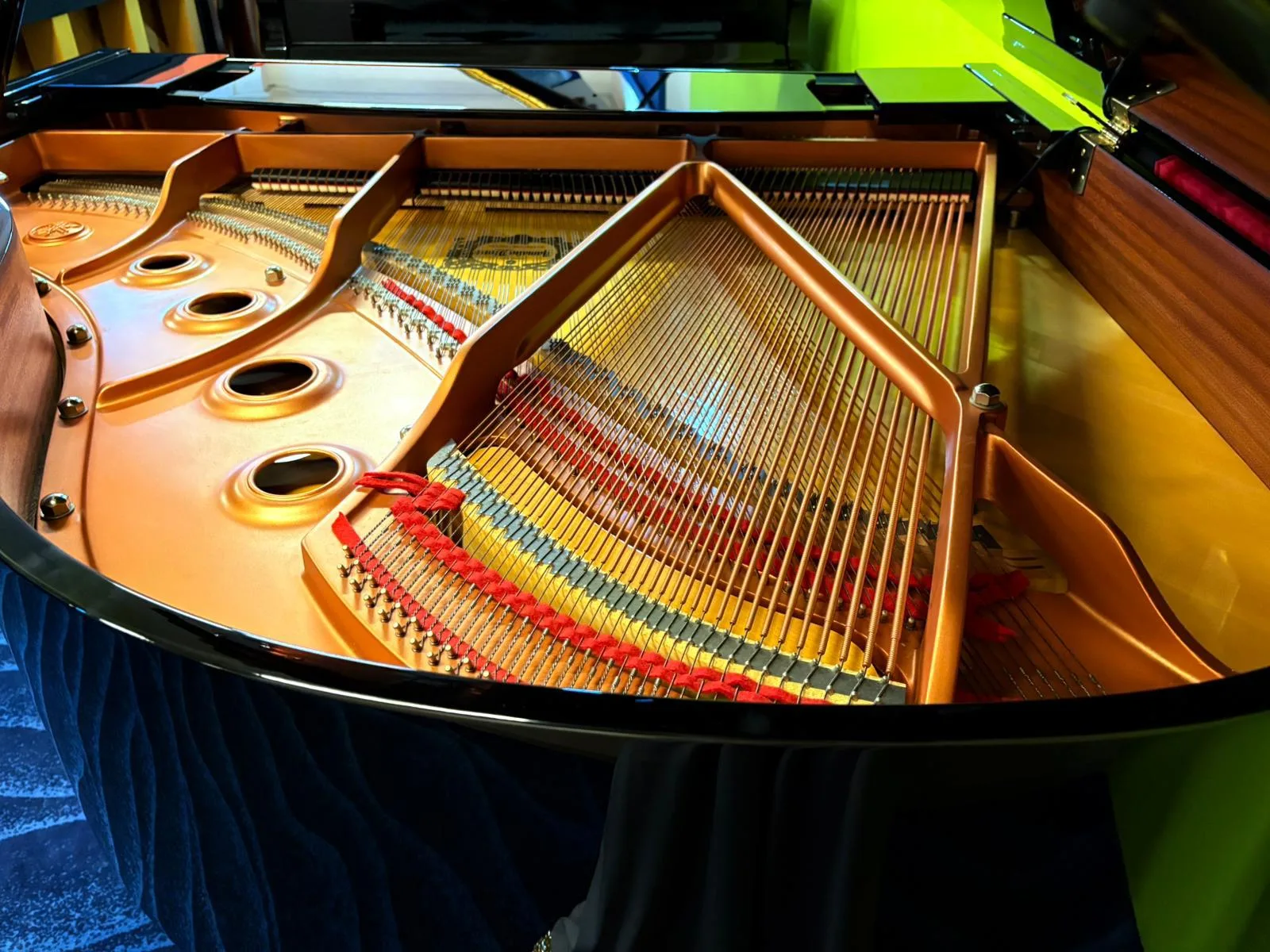
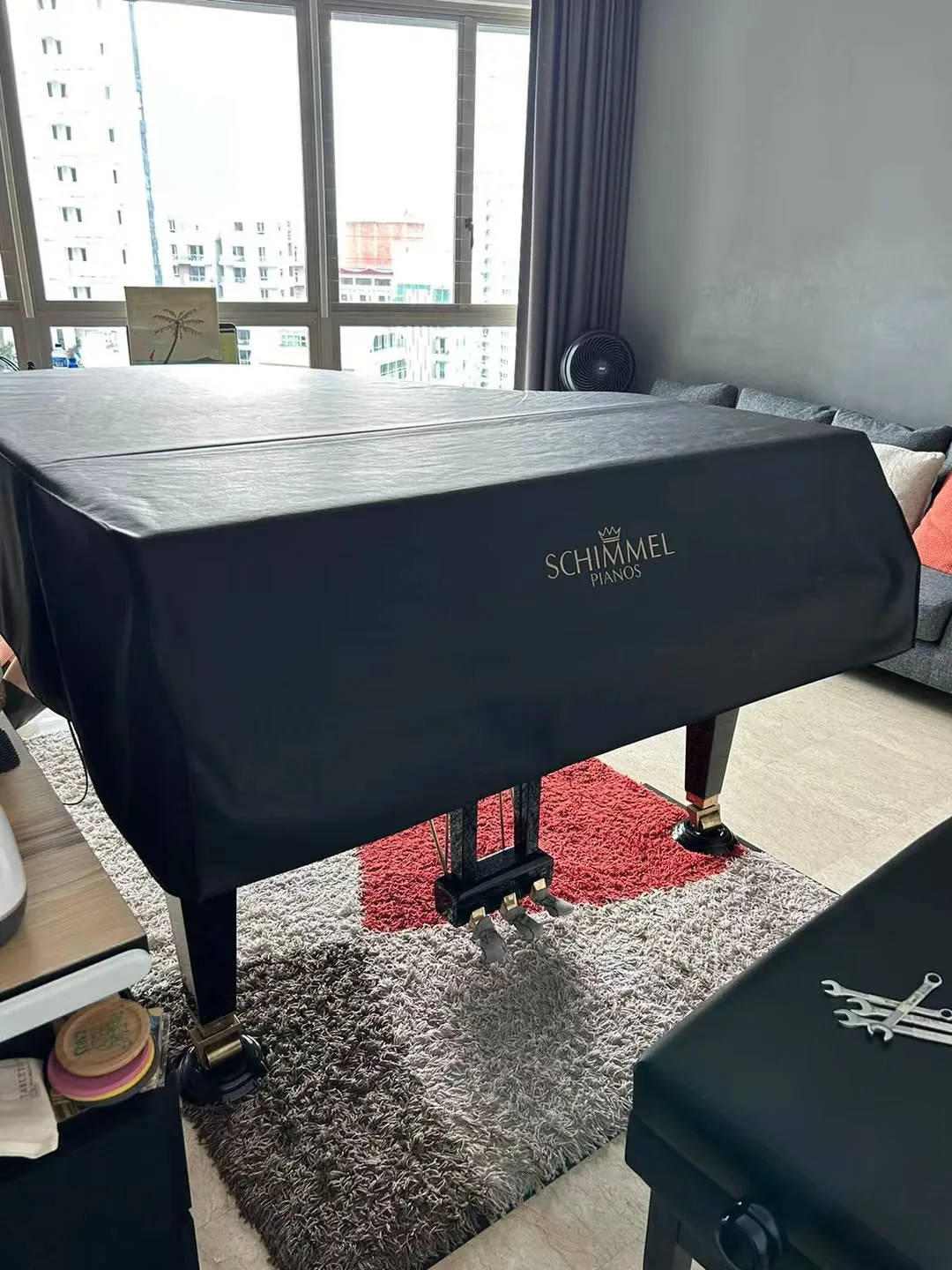
A German grand from a maker that has built pianos since 1885. The one we photographed carries Made in Germany on its keyboard and the Schimmel crest inside the case.
Read about it →The same four we check ourselves before an instrument goes on the floor. Every instrument is an original used piano. Not reconditioned, not rebuilt. Ask us about any of them on a specific piano and you get a straight answer.
Filmed on a phone at IMM, so this is close to what the room sounds like rather than a studio recording. Press play, with the sound on.
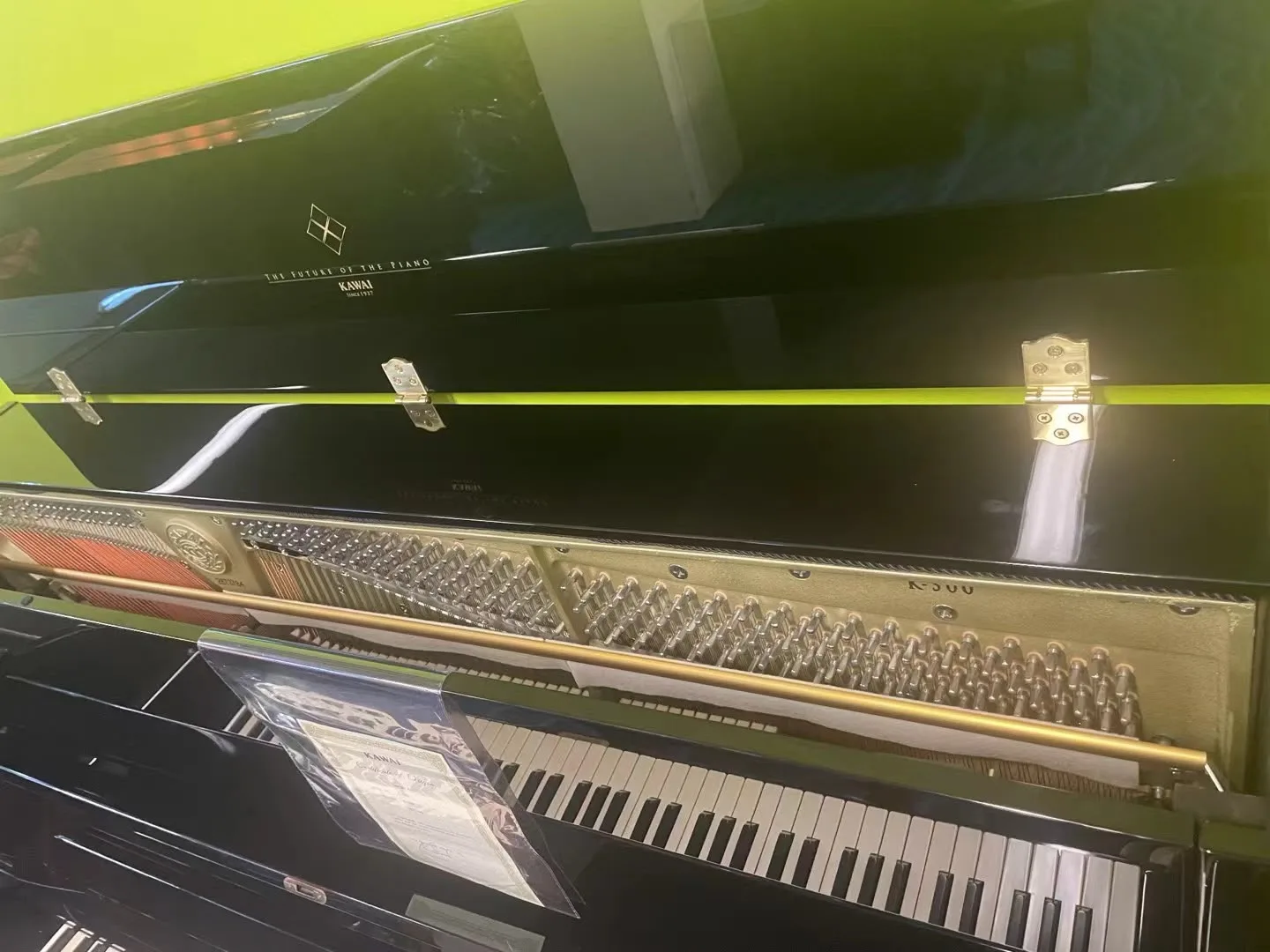
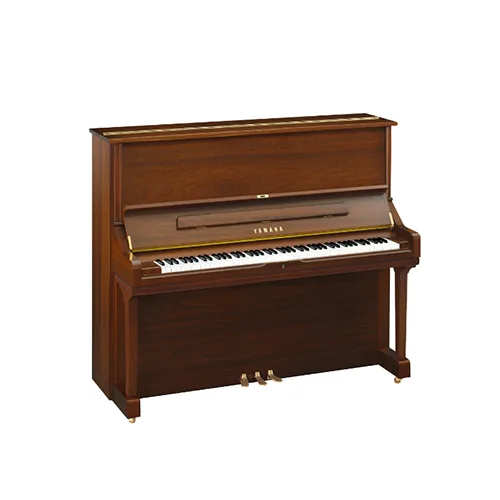
A good tall upright like the U3 will outperform a small or poorly kept grand, and it costs less to house. Length is what makes a grand worth it, so a grand that is too short is the worst of both.
Both, back to back, in the same room on the same afternoon. That is a fifteen minute job at the viewing gallery and it settles the question far better than any page can.
More than its footprint. It needs room for the lid to open, room for a bench and a player, and enough air around it that the sound is not bouncing straight off a wall.
Send a photograph of the room and the measurements and we will tell you honestly whether it works.
Often, yes, and the deciding factors are the lift and the corridor rather than the apartment. Grands are dismantled for the move and reassembled in the room. Tell us the building and the floor and we will work out the route.
A well kept one, yes, and the same argument applies as with uprights: the parts that wear can be worked on, the structure is what you are really buying. The stakes are higher because grands cost more, so the inspection matters more.
Yes, and a lot of people do for concerts, recordings and events. It is a different conversation from buying and it is quoted on the instrument, the dates and the access.
Message us with the model and we will tell you what is in, what condition it is in, and what it costs. If we have nothing suitable we will say that instead.